
What is a Mobile ICU Ambulance? A Complete Guide
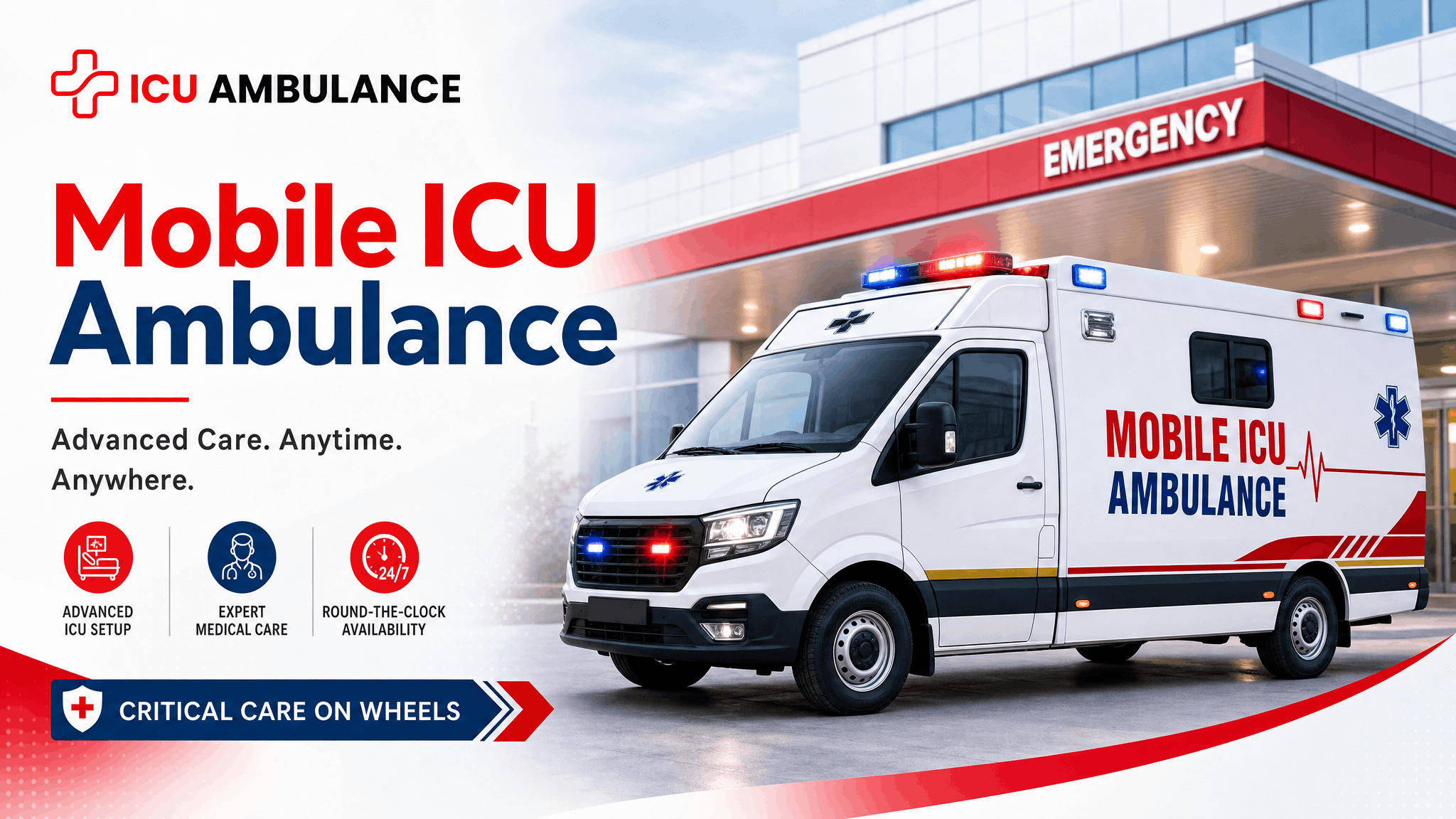
What is a Mobile ICU Ambulance? A Complete Guide
When a family member suddenly takes ill, time is of the essence. Ordinary ambulances can transport patients, but can't always keep critical patients stable during the journey. That's where a Mobile ICU Ambulance comes into play.
If you have a general idea of what a Mobile ICU Ambulance is, but haven't been able to differentiate it from a regular ambulance, then you have come to the right place to get the answers you need in an easy-to-understand format.
What is a Mobile ICU Ambulance?
A Mobile ICU Ambulance is a regular ambulance that has been modified to provide the same level of care as a hospital ICU. They contain ventilators, cardiac monitors, defibrillators, oxygen suppliers, infusion pumps, and suction machines. Like a hospital ICU, a doctor or paramedic provides care to the patient throughout the transport.
This type of ambulance is used to transport patients who need continuous medical support and care during transport, not patients who only need a ride to the hospital.
Modular ICU Ambulance vs Mobile ICU Ambulance:
Mobile ICU Ambulance vs Modular ICU Ambulance: In terms of time required to transport a fully equipped critical care ambulance to the patient, a mobile ICU ambulance refers to the delivery time. A modular ICU ambulance refers to the building of the ambulance cabin with sections that can be fixed for the ventilator, monitor, and other ICU equipment. In essence, "mobile" describes the time taken for the ICU to arrive, and "modular" describes how the ICU cabin is built. Read about modular ICU ambulances here.
What Equipment Does It Carry?
One of these ambulances should have:
-
A ventilator for patients who are unable to breathe on their own.
-
A cardiac monitor to check the patient’s pulse, ECG, and oxygen levels.
-
A defibrillator to treat patients in cardiac arrest.
-
An infusion pump to provide medications and fluids in an incremental dose.
-
A suction machine to remove secretions from the patient’s airway.
-
A supply of oxygen cylinders for long-distance transports.
-
An emergency medicine kit to provide medications.
It is good to ask the service provider if this equipment is functional before making a purchase.
When Do You Need a Mobile ICU Ambulance?
You might need this in situations such as:
-
Transferring a patient to a different hospital for more appropriate care.
-
Transporting a patient who is on a ventilator or is receiving oxygen support.
-
Transporting a patient who has had a stroke or heart attack and is under constant monitoring.
-
Transporting a patient over a long distance or across a state.
-
When a patient is involved in a major accident and requires immediate care in an ICU.
If the patient's condition is stable and does not need to be monitored, a regular ambulance can be used. However, in case of an unstable condition, this is a safer option.
Who Usually Books This Service?
Families usually only need this type of ambulance a handful of times, so understandably you have some anxiety about this first booking. There are a few reasons why a booking might be made:
-
A patient needs to be transferred between two hospitals by a member of the family.
-
A patient is being discharged but still needs home oxygen or ventilator support.
-
A family member needs to transport a very sick relative over a long distance.
-
A patient is being transferred for further/more specialised treatment at another hospital.
Why Choose ICU Ambulance Service Lucknow?
Choosing the right Mobile ICU Ambulance service in Lucknow is just as important as choosing the right hospital.
Our vehicles at ICU Ambulance Service Lucknow are equipped with working ventilators, cardiac monitors, and backup oxygen, and are staffed with trained paramedics who are able to respond to emergencies. Our team is aware of the importance of time in critically ill or injured patients; therefore, we are focused on an immediate response and safe, monitored transportation, whether we are traveling across the city or across the state.
How to Book This Ambulance Quickly
Booking should only take a single phone call. This is the typical process:
-
Call the ambulance service and describe the patient’s condition.
-
Provide pickup and drop-off locations.
-
Confirm the type of support needed: ventilator, oxygen, and/or monitoring.
-
The ambulance will arrive with its staff shortly.
It’s a good idea to save the service’s number, but typically people don’t have time to save numbers during an emergency and compare different services.
Final Word
It should never be a game-time decision when choosing a normal ambulance vs. a Mobile ICU Ambulance. Every second counts when making a decision that could potentially save a life. Understanding the features of each option helps you make the right decision at the right time.
If you need an emergency ambulance, call us anytime; we are available 24x7 with a mobile ICU ambulance.