
Dead Body Carrying Vehicle in India: Types, Rules, Cost & How to Arrange One (2026 Guide)
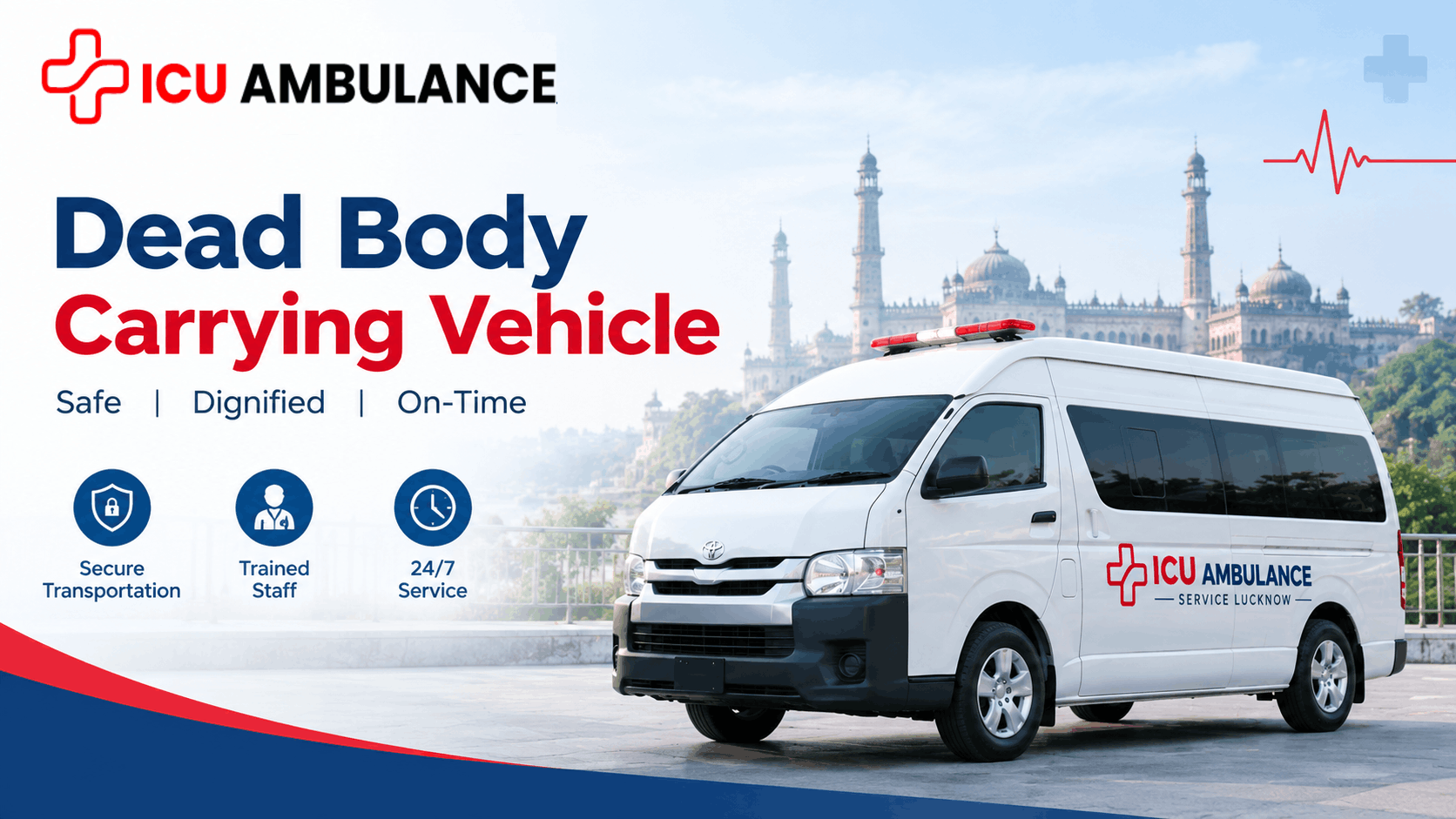
Dead Body Carrying Vehicle in India: Types, Rules, Cost & How to Arrange One (2026 Guide)
This guide is based on our daily work with hospitals, mortuaries, and families in Lucknow and across Uttar Pradesh. The legal points are explained as per the Registration of Births and Deaths Act, 1969, and standard hospital practice.
The hours following the death of a family member are busy and painful. Hospital formalities and relatives arriving from other cities. Rituals to organise. In addition to this, finding the right transport is not easy, and many families don’t know where to start.
In this guide, we will discuss how a dead body carrying vehicle works in India, which type for which situation, which papers you need to carry, and how to book without any confusion.
Key Facts at a Glance
-
In India, four types of vehicles are used, namely the hearse van, the mortuary van, the dead body freezer van, and the dead body ambulance.
-
The freezer van and dead body ambulance are the only ones that provide cooling on long journeys.
-
The Registration of Births and Deaths Act, 1969, states that a death must be registered within 21 days with the local registrar.
-
The Medical Certificate of Cause of Death (Form 4 for deaths in hospital, Form 4A for deaths outside hospital) is completed by the treating doctor.
-
In cases of accidental or unnatural death, the body cannot be moved until the police inquest and post-mortem are completed.
-
The price depends on the distance, type of vehicle, toll, waiting time, and the use of a freezer box. There is no set rate.
Quick Answer
A dead body carrying vehicle is a vehicle that is used to transport a dead person safely and with dignity from a hospital, home or mortuary to a cremation ground, burial ground, or another city. “The right choice depends on the distance, the time, and the length of time the body has to be preserved.”
What Is a Dead Body Carrying Vehicle?
A normal car or tempo can not do this job well. The proper dead body transport vehicle has a clean, covered area where the body can be laid flat and secured away from heat, dust, and public view. Good vehicles also include a trained driver, a helper, and a seat for one or two family members.
For a short trip within the city, a simple van may suffice. The body needs to cool down and be driven carefully and steadily on a long journey.
Types of Dead Body Transport Vehicle in India
1. Hearse Van
The hearse van is the usual vehicle for transporting the body from home or hospital to the cremation or burial ground. Sides covered. Has a platform or stretcher. Most hearse vans lack a cooling system, so they are best suited for short, same-city trips.
2. Mortuary Van
A mortuary van is mainly used to move a body from the place of death to a mortuary hospital or from the hospital mortuary to the family. It’s commonly used by hospitals and police for post-mortem cases. Made to be hygienic and easy to load, but not always for long highway trips.
3. Dead Body Freezer Van
A dead body freezer van is fitted with a freezer box or a cooling unit to keep the body cold during transit. This slows the rate of decomposition. It is the best choice if the distance is long or the funeral takes place after several hours or a day, because relatives are still on the way.
4. Dead Body Ambulance
A dead body ambulance is a closed ambulance fitted with a stretcher, usually with a freezer box, and space for attendants. It is the most comfortable, respectful way to travel from city to state. How is it different from a normal ambulance? Read our guide on Dead Body Ambulance vs Normal Ambulance.
Quick Comparison
|
Vehicle |
Cooling |
Best For |
Distance |
|
Hearse van |
Usually none |
Last rites in the same city |
Short |
|
Mortuary van |
Limited |
Hospital or mortuary transfer |
Short to medium |
|
Dead body freezer van |
Yes |
Delayed funerals, long trips |
Long |
|
Dead body ambulance |
Yes |
Inter-city and inter-state travel |
Long |
How to Choose the Right Dead Body Carrying Vehicle
Before making the booking, ask yourself 3 simple questions:
-
How far is the location?
-
When is the funeral?
-
How many family members will be travelling with you?
If it’s just a few hours in the same city, a hearse van is usually fine. If the body has to travel many hours or wait for relatives, opt for a freezer van or dead body ambulance. Cooling is even more important in hot, humid months.
What We See on the Ground
We see the same three issues over and over in our daily work with families.
So families book the vehicle before the hospital releases the body, and the vehicle sits for hours. Second, papers are scattered among relatives, and an identity proof that is missing delays the departure. Third, families negotiate price over the phone and then find out the freezer box is not working.
At big hospitals like KGMU and SGPGI, the mortality process has a different release mechanism. Ask ward or mortuary staff for the exact slip and timing before calling the vehicle. Most of these delays can be avoided with a five-minute check on release time, papers, and vehicle type.
Dead Body Transport in India: What Families Should Know
Transporting dead bodies in India is over long distances, through changing weather and different local rules. Some practical points help out:
-
Keep the hospital papers together in a folder with three or four photocopies.
-
Have one family member travel with the body, preferably in the front cabin.
-
Ask the provider for the driver’s name, number, and live location.
-
Book the hospital to give the clearance, not before.
“Under the Registration of Births and Deaths Act, 1969, every death must be registered with the local registrar within 21 days, and the certificate is issued free of charge in this period. A late fee is assessed after 21 days. After 30 days, the registrar must have written permission and an affidavit. The exact steps may vary slightly by state. Read more on the official Civil Registration System portal.
Documents Needed
Papers may differ per hospital, per city, and per case, but usually these are requested:
-
Signed Medical Certificate of Cause of Death or hospital death summary by treating doctor
-
ID of the deceased (Aadhaar or any government ID)
-
ID proof of family member travelling with the body
-
Letter of discharge or release from hospital
-
Police Permission (NOC) and Post-Mortem Report in Medico-Legal Cases like Accidents
-
Embalming certificate if the body is to be shipped by air or shipped over a very long distance.
Rules for Inter-City and Inter-State Travel
There is no specific ‘family licence’ to carry a body, but a few rules are important:
-
The Vehicle should have valid registration, fitness, and insurance papers. You can ask the provider to show them to you.
-
All papers must be in the cabin. At state borders, police or toll staff may ask to see them.
-
Air transport rules are more stringent and require more paperwork. First check with the airline.
Important Health and Legal Notice:
-
In cases of accident, suspicious or unnatural death, do not move the body yourself from the spot. Police have to complete the inquest first, and the body goes for a post-mortem.
-
If the death was from an infectious illness, the hospital may seal the body in a bag and provide directions for handling. Follow these carefully; do not open the sealed bag.
-
When in doubt as to whether the case is medico-legal, seek advice from the treating doctor or nearest police station before arranging transport.
Cost of a Dead Body Carrying Vehicle in India
There is no one set rate. The price is dependent on:
-
Travel distance
-
Vehicle type (eg, ambulance, hearse or freezer van
-
Use of a freezer box
-
Charges for toll, parking and waiting
-
Urgency and night travel
Always ask for a clear quote before you confirm and ask if toll and waiting time are included. Beware of any company that quotes a really low rate on the phone and then adds extras on. For more on pricing, see our guide on Ambulance Charges in India. If you are also comparing options, you can read Private Ambulance vs Government Ambulance in Lucknow.
How to Book a Dead Body Carrying Vehicle: Step by Step
-
Gather the hospital paperwork. Ask the doctor for the death certificate or summary.
-
Fix the drop-off and pickup. Note the home or hospital address and the final destination.
-
Call your provider. Tell us the pickup point, drop point, and time you need.
-
Ask about the vehicle type and quote. Find out if it’s a freezer van or ambulance and what the final price will be.
-
Read the details. Get the driver's name and number. Ensure the freezer is working.
-
Travel with the paperwork. Keep originals and copies on hand.
ICU Ambulance Service Lucknow provides dead body ambulance and freezer box vehicles available 24x7. We deal with pickups from hospitals like KGMU, SGPGI, and from homes in Gomti Nagar, Alambagh, Nirala Nagar, and Faizullaganj. For local booking details, please check out our page on Dead Body Ambulance Service in Lucknow. Save our number from our Ambulance Mobile Number guide, and for state-wide numbers, see the UP Ambulance Helpline Number blog.
Common Mistakes to Avoid When Booking
-
If you select only by price and ignore the condition of the vehicle
-
Not testing the freezer box
-
Dithering over the paperwork
-
Not inquiring about toll and waiting charges
-
Private car or open tempo which offers no cooling, privacy, or safe placement for the body
Frequently Asked Questions
What's the best dead body carrying vehicle for long distance?
A dead body freezer van or a dead body ambulance. Both keep the body cold and travel more smoothly on highways.
Can I use a private car to carry a body?
Not recommended. A private car has no cooling or proper space, and it may cause problems at checkpoints.
Is a police NOC always required?
No. It is mainly required for medico-legal cases like accidents or unnatural death.
Do I need a death certificate before booking?
You can call and book anytime, but generally the providers and checkpoints ask for the death certificate or the hospital summary during pickup and travel.
How is a hearse van different from a mortuary van?
The body is brought in a hearse van for the last rites. A mortuary van is used primarily to transport the body from the place of death to the mortuary.
Final Words
Choosing the right dead body carrying vehicle will save you time, money, and stress in a very hard moment. Know your vehicle, know the distance. Have the papers ready. Confirm the full cost before booking. A clear, peaceful plan allows the family to focus on what’s most important.
Looking for a car to transport corpses? Call Us Now - Available 24x7
ICU Ambulance Service Lucknow
DISCLAIMER: This article is solely for educational purposes and is not intended as legal or medical advice. Rules and paperwork vary by state, hospital, and case. Please check with the treating doctor, the hospital, the police, or the local registrar before you go.