
Road Ambulance: Complete Guide for Safe Patient Transportation
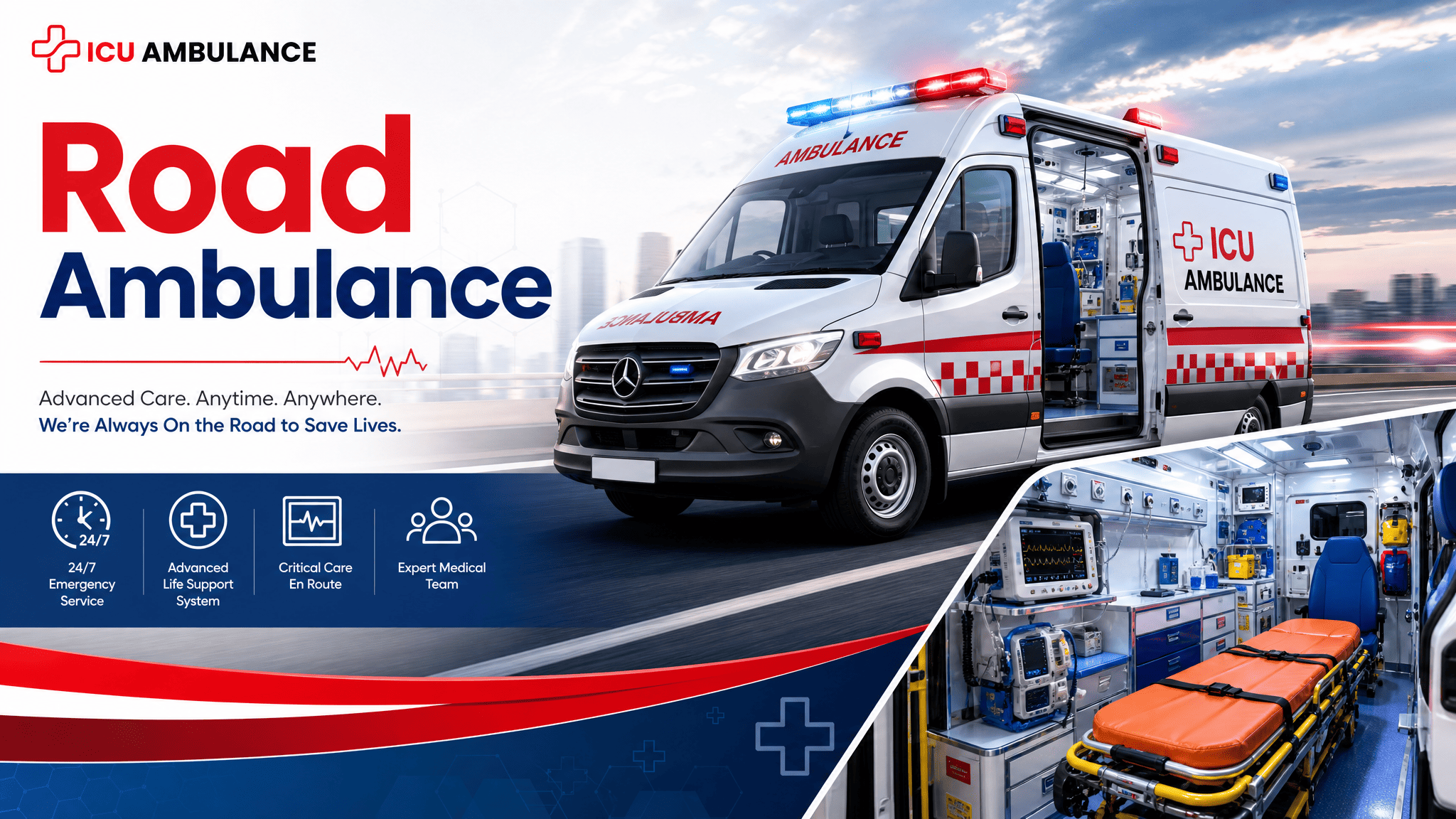
Road Ambulance: Complete Guide for Safe Patient Transportation
Transporting patients by a normal car is not always safe when moving patients between hospitals, for post-discharge home transport, or transport to a medical facility during an emergency. A Road Ambulance provides medical transport to patients and allows care to be provided to the patient during the transport.
Depending on the patient's condition, an ambulance can be equipped with oxygen, monitoring devices, emergency medicines, a stretcher, and other medical equipment. The right ambulance should be chosen according to the patient's medical needs rather than only the distance of travel.
Family members and patients often have to book ambulance transport themselves. Knowing how the ambulance transport system works helps families book transport more quickly and helps them avoid choosing a transport ambulance that is insufficient.
What Is a Road Ambulance?
A Road Ambulance is a vehicle used to transport patients over roads. Unlike a normal passenger vehicle, a Road Ambulance can support patients on stretchers and can provide basic or advanced medical support.
There are different levels of care provided by different ambulances. Some ambulances can only provide safe transportation for patients who are stable, while others can provide medical support for patients who require constant monitoring.
An advanced service ambulance can provide medical personnel for a patient who requires supervision, but this would increase the cost of the service.
When Do You Need a Road Ambulance?
Not all patients need to be loaded into an ambulance, but sometimes a patient can be loaded more safely and more comfortably in an ambulance as compared to a private vehicle.
Examples include, but are not limited to:
-
Inter-facility patient transfers
-
Emergency patient transports after an accident
-
Patient transfers with oxygen support
-
Transport of the elderly and/or mobility-restricted patients
-
Patient transports post-surgery and/or post-illness
-
Patient transports from home to the hospital
-
Long-distance patient transports
-
Patient discharge when transport in a normal car is not safe
-
Patient transports where medical staff will be monitoring the patient during transport
For patients with unstable or serious conditions, the deciding medical authority should determine what level of transport support is necessary.
Types of Road Ambulances
Patients have unique medical needs. Here are some options you might see:
BLS Ambulance
A Basic Life Support ambulance transports patients who need medical oversight or minor emergency support and are stable enough not to need continuous medical interventions. These ambulances may have oxygen, a stretcher, first-aid supplies, and basic monitoring equipment.
ALS Ambulance
An Advanced Life Support ambulance is used when the patient needs more advanced medical support during transport. The service's offering determines the monitoring and emergency care equipment in the ambulance, as well as the medical personnel who might accompany it.
ICU Ambulance
Patients who need continuous medical support transported to an ICU would be transported in an ICU ambulance. It is similarly equipped to an ICU.
Ventilator Ambulance
Transporting a patient who is dependent on a ventilator would require advanced planning and the support of an ambulance equipped with a ventilator.
Oxygen Ambulance
Transporting a patient who requires supplemental oxygen would require an ambulance equipped with oxygen. The support would be determined by the patient's condition.
What Equipment Can Be Available?
Equipment found in ambulances can differ based on the category and service provider. Depending on the patient's needs, an ambulance may contain:
-
A patient stretcher
-
An oxygen cylinder/supply system
-
A pulse oximeter
-
A blood pressure monitor
-
A cardiac monitor
-
Suction equipment
-
Emergency medical supplies
-
First-aid equipment
-
A defibrillator (in an advanced-care ambulance)
-
A ventilator (in a ventilator-equipped ambulance)
-
IV/infusion support equipment
Families are encouraged to confirm the availability of necessary equipment, especially when the patient has a serious medical condition, as not all equipment may be booked or available.
One should not assume that all ambulances have the same medical setups. The equipment provided by each ambulance service should be confirmed by the user.
Road Ambulance for Hospital-to-Hospital Transfer
Medical transports occur for many reasons, and transfers between hospitals are very common. Smaller hospitals may not have the capability to provide certain types of treatment or surgery. In these cases, the patient may need to be transported to a hospital with those services.
There are a number of things the family should confirm before agreeing to a transport. They are:
-
The current condition of the patient
-
If the patient is requiring oxygen or ventilator support.
-
If a medical attendant is required to accompany the patient.
-
What equipment is required for the journey.
-
The receiving hospital and department.
-
The estimated distance to the receiving hospital.
The sending hospital is obligated to give the receiving medical team any reports, prescriptions, and/or tests that may be relevant to the patient.
How to Choose the Right Road Ambulance
Ambulances should have all necessary equipment to provide adequate care to patients. Choosing an ambulance based on price alone may result in an insufficient vehicle.
Consider the following when booking an ambulance:
1. What is the condition of your patient?
Are they stable? Do they need oxygen? Do they need to be monitored? Do they need critical care support?
2. What type of ambulance do you need?
Do you need BLS, ALS, ICU, a ventilator ambulance, etc.?
3. What medical equipment does the ambulance have?
Do they have the equipment your patient needs?
4. What medical staff will be on the ambulance?
Will there be any staff who are trained to care for critically ill patients?
5. How far will your patient be transported?
Will there be enough equipment for the patient and support for the care staff during the transport?
6. How busy are they?
What is the estimated time of arrival to your location? Do they have any other ambulances that are able to transport your patient?
What Information Should You Give While Booking?
Fully informing the dispatcher helps the ambulance crew select the correct vehicle for the transfer.
When taking the booking call, provide:
-
Patient's approximate age
-
Patient's medical condition
-
Where the patient is being picked up
-
Where the patient is being taken (hospital address)
-
If the patient is able to walk or if a stretcher is needed
-
If oxygen is needed
-
If a ventilator is needed
-
If a medical attendant is needed
-
Approx. distance to be travelled
-
Any other medical condition/requirement communicated by the treating team
This will help dispatch the right vehicle for the patient.
Preparing a Patient for Road Transportation
Have the patient's medical records on hand as the ambulance approaches. These records may consist of prescriptions, test results, discharge summaries, and the patient's hospital records.
When a patient is transported between hospitals, try to get both hospitals to coordinate so that the receiving hospital is alerted to the patient's anticipated arrival, the receiving department has been prepared, and a bed has been made ready.
Do not adjust a patient's medications, oxygen, or any other element of a patient's care to prepare for a transport. Follow the instructions of the medical team that is caring for the patient.
Why Professional Ambulance Transportation Matters
An ambulance provides a safer way to transport patients who are unable to be transported in a normal vehicle. The arrangement of a stretcher makes it easier to move patients, and the medical equipment in an ambulance can provide basic or advanced care.
For patients in critical condition, it is important that there be trained personnel and the right equipment, because the patient’s condition may vary during transport.
An ambulance is not a substitute for treating a patient in a hospital. An ambulance is there to provide the right level of care to transport a patient and provide support during the transit.
Book a Road Ambulance with ICU Ambulance
Choosing the right ambulance depends on the patient's condition and the kind of support they require during transportation. Some patients only need assistance with transportation, while others require oxygen support or advanced monitoring with critical care facilities.
ICU Ambulance offers different transportation options for patient transfers. Please send the condition of your patient, the pick-up point, the destination, and the required medical support so that we can fit the appropriate ambulance to your needs.
We offer safe medical transportation. You can book a Road Ambulance based on your patient's requirements.