
What Is a Multispeciality Hospital? Departments, Benefits, and When to Choose One in India
What Is a Multispeciality Hospital? Departments, Benefits, and When to Choose One in India
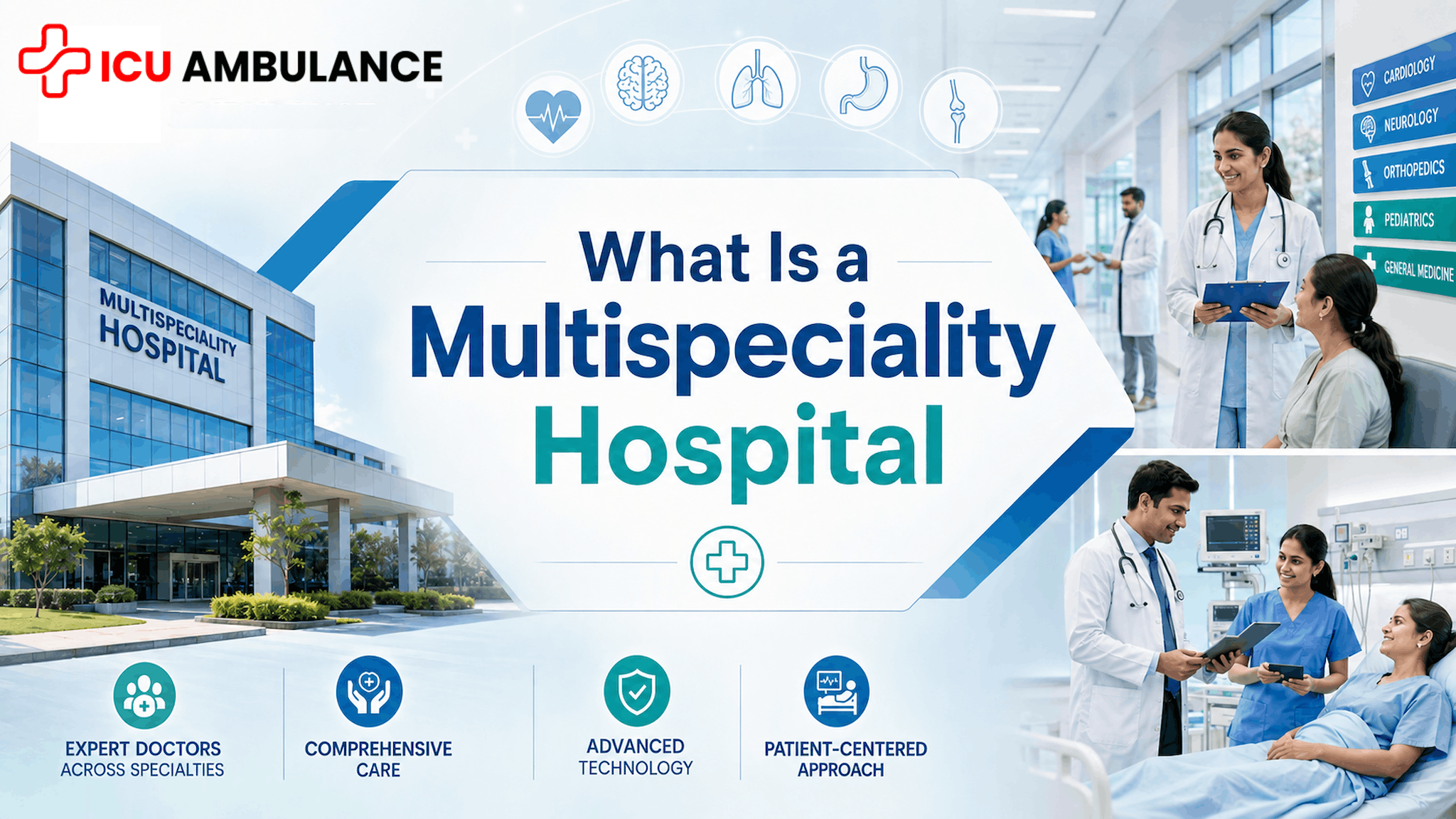
What is a multispeciality hospital? It is a hospital where one can find different specialties under one roof. It has different wings and departments for various specialties like cardiology, neurology, orthopedics, nephrology, oncology, gynecology, and pediatrics, as well as emergency, ICU, laboratory, and pharmacy services.
When a family member gets sick, it is too painful and time-consuming to have to run to multiple clinics and centers for various tests. A well-designed multispecialty hospital has various specialties and services, and can help reduce the need for family members to run all over the place. This article describes the various services, costs, and situations where using a multispecialty hospital is beneficial.
Quick Facts
-
Multispecialty hospitals have many branches, while speciality hospitals have just one.
-
With Ayushman Bharat PM-JAY, eligible families get cash back benefits up to 5 lakhs every year.
-
From October 2024, all individuals 70 years and older will get an Ayushman Vay Vandana card, no matter the income status.
-
For Uttar Pradesh, call 108 for a free government ambulance service, and 112 for any other emergency service.
What Does Multispeciality Hospital Mean?
Multispeciality is synonymous with large. So a multispeciality hospital is a large hospital with many specialities.
-
A patient’s case proceeds through a number of facilities within the campus.
-
A patient’s case may be taken over by a speciality physician from cardiology, neurology, etc.
-
A case may involve a number of surgeries and subsequent stays in the ICU. Further care and case management may be carried out on the same campus.
-
A patient’s case may be managed in an integrated fashion.
-
Repeat diagnostic tests may be avoided.
Most such hospitals have more than 100 beds. A number of hospitals in Lucknow, including SGPGI, KGMU, and other private hospitals, are based on this model.
Common Departments
-
Emergency and trauma: 24/7 care for victims of accidents and other trauma; stroke and heart attack patients, etc.
-
Cardiology: ECG, angiograms, angioplasty and bypass surgery.
-
Neurology and neurosurgery: Disorders of the brain and spine, including seizure disorders (epilepsy) and stroke.
-
Orthopaedics: Sports injuries and dislocations/fractures of the extremities; joint replacements.
-
Gynaecology and obstetrics: Pregnancy and delivery.
-
Paediatrics and neonatology: Newborn and pediatric intensive care.
-
Nephrology and urology: Renal disorders, kidney stones, renal failure and other disorders of the urinary tract.
-
Gastroenterology: Disorders of the stomach and intestine.
-
Oncology: Malignant disorders.
-
Critical care (ICU/CCU/NICU): Intensive care units for adults and neonates.
-
Radiology and pathology: Lab work and diagnostic radiology.
Multispeciality vs Super Speciality vs General Hospital
|
Feature |
General Hospital |
Multispeciality Hospital |
Super Speciality Hospital |
|
Focus |
Common illnesses |
Many specialities together |
One advanced field (heart, kidney, cancer) |
|
Doctors |
General physicians, few specialists |
Specialists in many branches |
Super specialists (DM/MCh) |
|
ICU and emergency |
Limited |
Available |
Advanced, field-specific |
|
Best for |
Fever, minor injury, check-ups |
Mixed or unclear problems, surgery |
Complex single-organ disease |
|
Cost |
Lower |
Moderate to high |
Usually highest |
Many large hospitals are both: multispecialty overall, with super speciality units inside.
Key Benefits
1. Transportation savings: all services from consultation to surgery, and pharmacy, are in the same location.
2. Teamwork: doctors are not limited to working with just the specialists in their own department.
3. Around-the-clock care: if a patient is having a stroke or heart attack, time is of the essence. Many report they are equipped to care for such patients and have an on-site blood bank.
4. Elimination of repetitive tests: results are electronic and accessible to all medical staff.
5. Financial assistance: there are a lot of facilities covered under PM-JAY and health insurance.
6. Convenient medical care: the facility offers a variety of medical, dietary, and rehabilitative services.
When Should You Choose One?
A multispecialty hospital is for:
Any emergency such as a severe accident, stroke-like symptoms, chest pain, sudden weakness or numbness, heavy bleeding, or if you are finding it hard to breathe.
-
When you are not aware of which specialist you should see.
-
If you suffer from more than one health condition, for example, you have diabetes and kidney disease.
-
When you are likely to go through major surgery.
-
If you are a senior citizen or expectant mother with a preexisting condition and high-risk pregnancy.
For a simple flu, cold, and other minor health conditions and for tests like routine blood tests and scans.
The Step Before the Hospital: Emergency Transport
Good treatment starts before you reach the gate. In a heart attack, stroke, or road accident, how the patient is moved decides how stable they arrive.
In Uttar Pradesh, the UP ambulance number to remember is 108. The 108 ambulance service in UP is free and run under the state health department and the National Health Mission. The number 102 is generally used for pregnant women and newborns, and 112 is the single emergency number. If you want to know how they differ, read our guide on 108 vs 102 ambulance. The government ambulance service in Uttar Pradesh covers most districts, but waiting time can be longer during peak hours or in crowded areas. Our full explainer on the UP ambulance service covers both government and private options.
That is when families turn to a private ambulance. A private ambulance in UP can be booked directly, and it is commonly used for hospital-to-hospital transfers, for example, from a district hospital to a Lucknow centre.
For serious patients, an ICU ambulance in UP carries a ventilator, cardiac monitor, oxygen, suction unit, and trained paramedics, so treatment continues on the road. You can see what we offer on our ICU ambulance page.
ICU Ambulance Service Lucknow has been running since 2004, and our team regularly shifts patients to hospitals such as KGMU and SGPGI. One lesson stands out from this work: families lose the most time not on the road, but in deciding whom to call and which hospital to choose. To know what happens after you dial, read what happens when you call an emergency ambulance. For any emergency ambulance UP needs, day or night, our 24x7 team on the homepage is ready to help.
Tip: Save 108, 112, and one private ambulance number in your phone today.
How to Choose the Right Hospital
- First, check accreditations. The Quality Council of India has a national system for accreditation of hospitals known as NABH. Search the site to find accreditations. Accreditation is valid for a period of 3 years.2. Second, verify the doctor. Confirm the doctor has a specialization degree and is registered with the state medical council.
- Third, ask about the ICU and Emergency services. Find out how many ICU beds and ventilators there are and if the Emergency Service is operating at that time.
- Fourth, think about the location of the hospital. In cases where a patient needs to be treated immediately, the nearest hospital should be considered even if it is not as well known.
- Fifth, find out if your health insurance or Ayushman Card is accepted by the hospital for the treatment.
- Sixth, get an approximate cost estimate from the hospital for the room, ICU stay, surgery, and medicines.
- Lastly, find the average opinion of the hospital. The feedback should be about the condition of the facility, the staff, and whether the hospital overcharged for services.
Cost and Insurance in Simple Words
Price depends on the location, the type of room, the nature of the procedure, and the length of stay.
Trust and Government hospitals are less expensive. Private hospitals charge more.
The Ayushman Bharat PM-JAY gives beneficiaries a cashless benefit of 5 lakh rupees each in a family every year. Since the launch of the scheme in 2018, more than 48 crore (480 million) Ayushman cards have been released. From October 2024, all citizens in the age group of 70 and above will be eligible for the Ayushman Vay Vandana card. The PM-JAY scheme allows for a top-up of 5 lakh rupees for beneficiaries aged 70 and above. Other family members in the same income category share the 5 lakh pool.
You should ask for a package price for admission and keep all hospital bills to help you with reimbursement.
Frequently Asked Questions
What is a multispeciality hospital in simple words?
A multispeciality hospital is a medical facility that has professionals and departments that cover various specialties of medical practices. This means that a patient can get diagnostic tests and treatment for various diseases at the same hospital.
What is the difference between a multispeciality and a super speciality hospital?
As mentioned above, a multispeciality hospital covers different specialties of medicine. A super speciality hospital covers a single specialty; for example, a hospital that covers all specialties of care of the kidney would be a super speciality hospital.
Is a multispeciality hospital good for emergencies?
Yes. A multispeciality hospital has different departments, for example, an emergency department and a blood bank. However, one should check if the emergency department of the hospital functions 24 hours.
Which ambulance number should I call in Uttar Pradesh?
108 is the number to call for a free ambulance service. 102 is the number to call for an ambulance for pregnant women and new mothers. 112 is the number to call for any other emergency.
Do these hospitals accept Ayushman Bharat?
Yes. However, not all hospitals would provide services covered under the Ayushman Bharat card.
Do I need a referral?
Not in most cases. However, you may require a referral for some insurance claims.
Final Thoughts
What’s most important when the illness or injury is serious or unknown is access to various specialists, tests, procedures, surgery, and intensive care. If you have time, choose the hospital that is closest to you and is known to have high-quality care and an operating emergency department. Safe and prompt transport to the hospital and to the right specialist care is of equal importance.
Require emergency transport to a specialist center? ICU Ambulance Service, Lucknow, is available 24 hours a day. Call +91 7880310444 or contact us here.
This information is for general awareness only. It is not a substitute for medical care. If this is a true emergency, call ‘108’ or ‘112’ or go to the closest hospital.
Our sources are: NABH (November 2019, nabh.co), National Health Authority PM-JAY (pmjay.gov.in), and National Health Mission Uttar Pradesh. (March 2020, updhm.up.nic.in).